

Stay Connected!
Sign up today and get inspiration straight to your inbox.

From hospitality and scratch cooking to seasonality and waste reduction, Italian restaurants continue to offer lessons every operator can learn from.
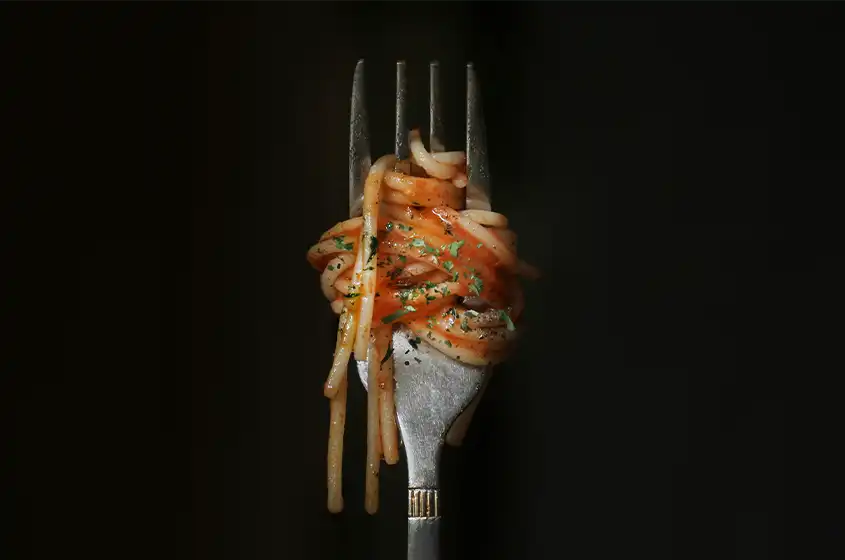
In a key scene from the 1996 film “Big Night,” brothers Primo and Secondo find themselves at odds over a customer. The guest complains there isn’t enough seafood visible in his risotto, then asks for a side of spaghetti and meatballs.
It’s a classic battle between the artistic chef and practical business manager. Primo (Tony Shaloub), the chef, is horrified. Authentic Italian food doesn’t work that way, he insists. Secondo (Staley Tucci), the restaurant’s front-of-house manager, sees things differently. The brothers are struggling to keep the lights on, and he’s more concerned about keeping customers happy than winning a culinary argument.
The tension between authenticity and adaptation has played out in Italian restaurants across America for generations.
Today, the children and grandchildren of immigrants are running these institutions in cities big and small across the U.S. Whether a restaurant chooses Primo’s route of deep authenticity, Secondo’s route of giving guests what they know and love, or a little bit of both, the core principles remain remarkably consistent: quality ingredients, simple preparation, genuine hospitality and a commitment to using every ingredient to its fullest potential.
Those lessons have helped Italian restaurants survive for generations. They can help operators of any concept thrive today.
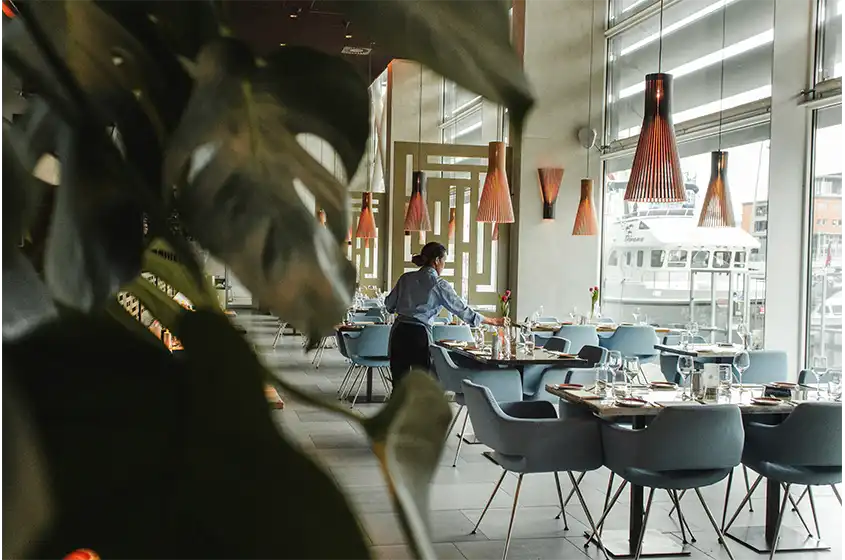
For Michael Saracino Jr., third-generation operator of Bartolino’s in St. Louis, hospitality starts with remembering where the business came from.
“Grandpa came over in 1954—he had four boys, they got involved in the restaurant business, and now they’re all in their mid-to-late 60s. It’s the third generation that’s kind of taking over the torch, but we’re obviously always remembering where we started from and paying respect to the family who got us to where we are now.”
Working with family isn’t always easy, but Saracino Jr. says the mission remains the same. “There’s way more better days than there are bad days. To say that we don’t have arguments, I’d be lying to you. But at the end of the day, we’re Italian. We’re all family. We hug and kiss and make up, and at the end of the day we have to serve the community, put out a good product, take care of our guests—always—and make sure they are happy when they leave.”
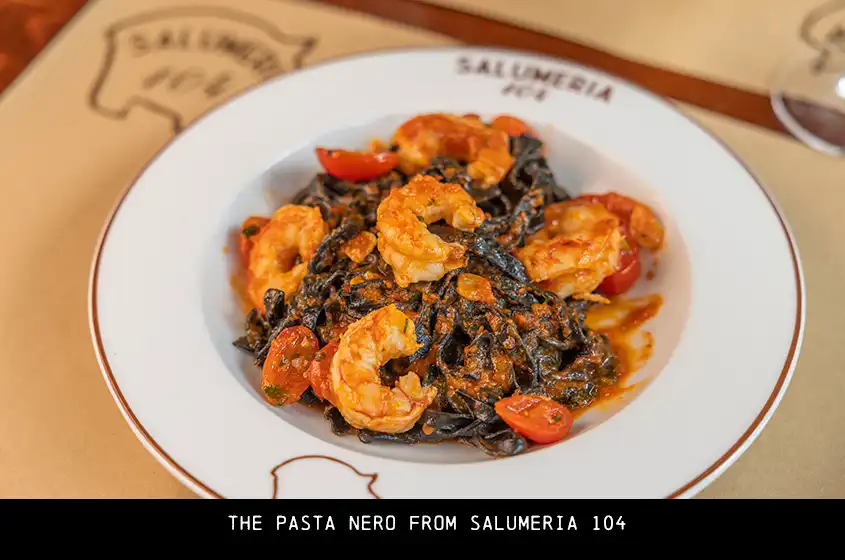
Italian cooking isn’t about complicated techniques or expensive ingredients. It’s about letting quality products speak for themselves.
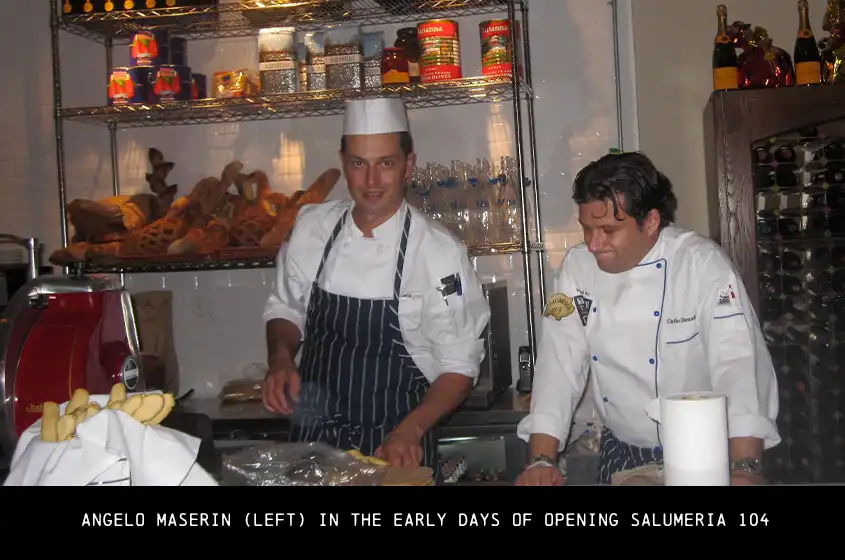
“Italian cooking is about fresh ingredients and very simple preparation,” says Chef/Partner Angelo Masarin of Salumeria 104 in Miami and South Florida. “If we’re serving fish, it needs to be a good fish and prepared with simple ingredients. I’m not limited to my region or the north region, but we’re going all around and trying also to go with the seasonality.”
Executive Chef Drew Keane of Gibsons Italia in Chicago agrees.
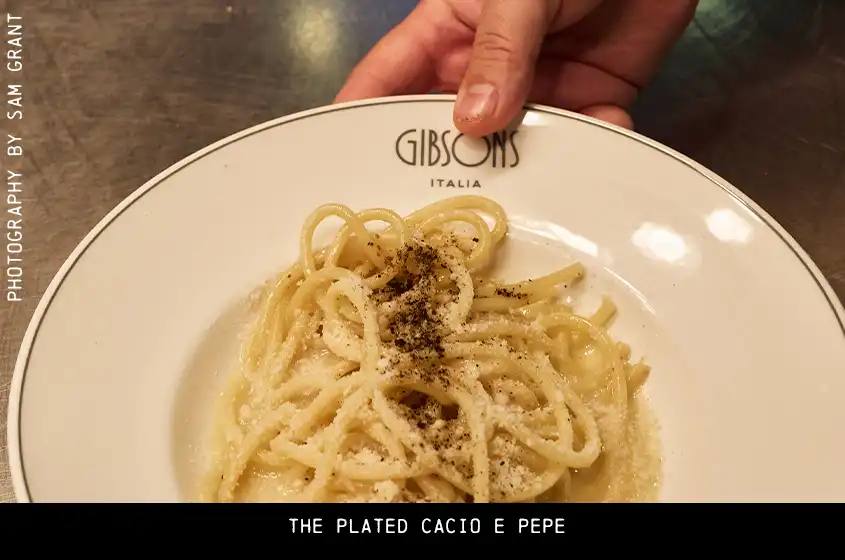
“A dish could have just three ingredients and still be super delicious,” he says. “Pasta aglio e olio is delicious–and it’s just olive oil, garlic and butter, plus maybe some parsley and crushed red pepper.”
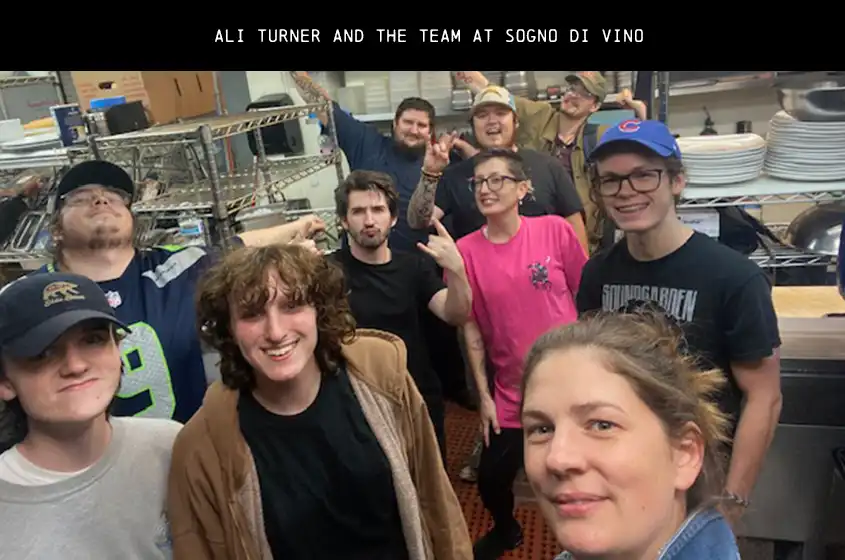
For Ali Turner, partner/manager at Sogno di Vino in Poulsbo, Washington, simplicity means trusting the ingredients.
“To me, Italian food is about letting great ingredients stand on their own,” she says. “If you make things from scratch as much as possible, and start with the best ingredients you can find, you don’t need much else. That’s really the philosophy that drives our menu.”
Italian cuisine has long embraced the idea of using every part of an ingredient. That mindset feels especially relevant as operators continue to battle rising food and labor costs.
At Salumeria 104, Masarin transforms charcuterie scraps into ravioli filling. “The reason why we have ravioli on the menu is to make use of our prosciutto Parma and mortadella scraps,” he says. “We stew them in the oven for a filling for the ravioli. This is in line with Italian culture, which is never waste anything and recycle as much as you can.”
Executive Chef Adam Pflueger of Toscano's Italian Grill in Puyallup, Washington, learned resourcefulness while cooking for touring bands. “A lot of times you’re out in the desert, you’re nowhere close to being able to get anything, so you have to cross-utilize as much as possible,” he says. “To me, that’s one of the most Italian things you can do. Italian cooking has always been resourceful. Any scrap that’s edible doesn’t belong in the garbage.”
Pflueger takes the heels from leftover focaccia bread he makes and bakes daily, dries them out and grinds them into breadcrumbs for dishes like chicken Parmesan. Lobster shells become stock for cooking risotto. Vegetable scraps, like squash, become bisque.
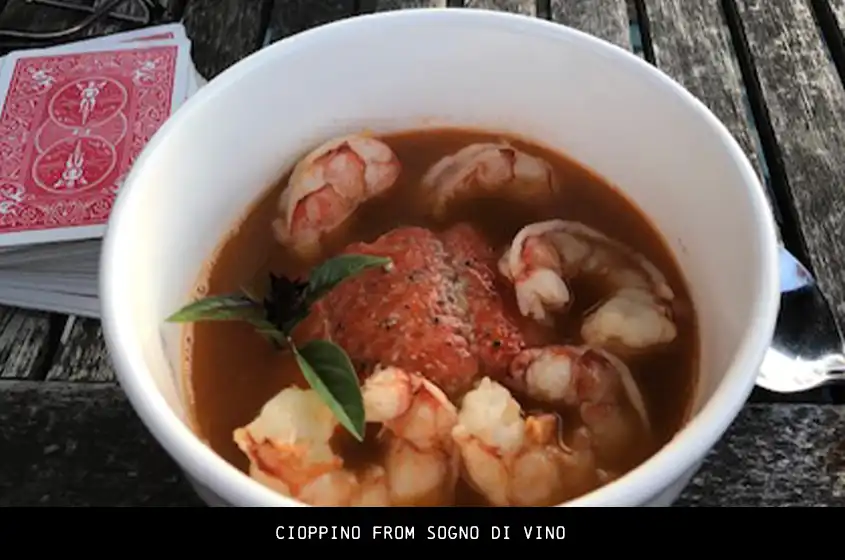
At Sogno di Vino, Turner applies the same philosophy to seafood. “Cross-utilization is huge for us, because labor and food costs are always top of mind,” she says. “A dish like our cioppino or bordetto is a great example. We’re already filleting salmon and halibut, already bringing in clams and shellfish, and making stock in-house. Those dishes allow us to use every part of what we’re bringing through the kitchen.”
Respecting tradition doesn’t mean standing still.
“If I hire somebody new and they have a way to do something better than what I’ve been doing since the early ‘60s, I’m all ears,” says Saracino Jr.. “That’s how you get better. You always have to have a sponge brain and be open and willing to learn.”
Pflueger keeps classics intact, but uses specials to keep the menu fresh.
“Most of our core menu has stayed the same for years—spaghetti bolognese, Chicken Parmesan—those are dishes I wouldn’t dream of changing,” he says. “At the same time, as a chef, cooking the same things over and over can get a little monotonous. I need to stretch my creative legs a bit.”
One example is his blackberry pork chop, which began as a seasonal special before earning a permanent place on the menu.
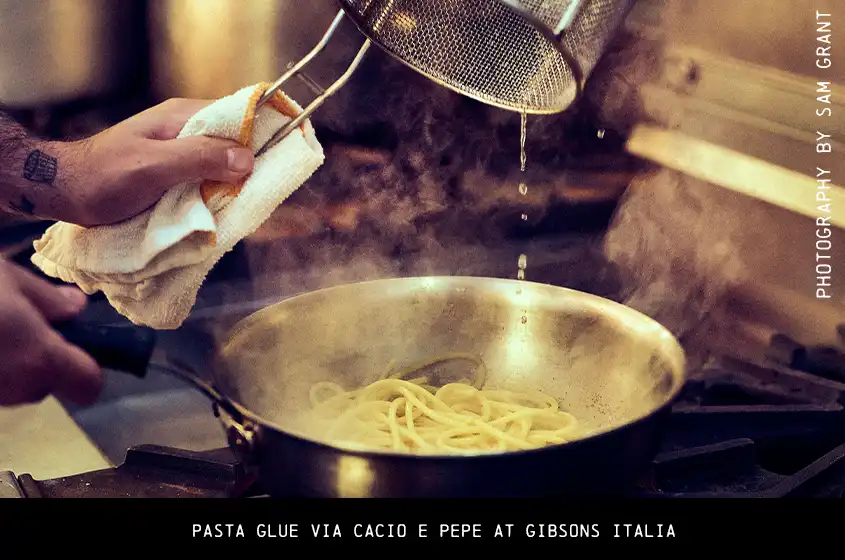
Keane has also found ways to modernize classic techniques. He makes a “pasta glue” by purposely overcooking pasta and puréeing some of it with the starchy pasta water for a paste that he’ll add to the pan when making delicate, egg-based sauces for cacio e pepe and carbonara. The glue helps stabilize the sauce and prevents it from separating during service, which is especially useful in high-volume, fast-moving operations.
Like many traditional Italian cooks, today’s chefs continue to draw inspiration from what’s growing nearby.
In Florida, Masarin incorporates regional seafood and tropical produce. “We have a great base of farms down in Homestead, about 40 minutes from Miami, but mostly tropical fruit,” he says. “For seafood, stone crabs and spiny lobsters are two favorites here in South Florida.”
At Sogno di Vino, seasonal ingredients drive dishes like a rotating burrata appetizer.
“The burrata changes throughout the year, because it’s such a great canvas for seasonal ingredients,” Turner says. “In the fall we serve it with dried apricots, arugula and an apricot glaze. You get the peppery greens, the sweetness of the fruit and the creaminess of the cheese all working together.”
Keane leans into rich flavors and braises during those cold months. “You’ll see a lot of braised sugos and heavier meats and some game,” he says. “We’ll use some wild boar, we’ll bring in duck, and you’ll see that on the menu. It’s much more traditional Italian winter and fall meals.”
Making pasta remains one of the great expressions of Italian craftsmanship, but it also requires time, labor and expertise.
At Salumeria 104, Masarin relies on a sheeter. “We continue to make our pasta in-house, which is different than an extruded pasta, because it’s made with a sheeter,” he says. “It treats the pasta in a very different way than the usual pasta that maybe you find in many restaurants, because it requires a little bit more skill to make the pasta, and they taste different also.
At Gibsons Italia, Keane says he’s fortunate to be able to have a pasta maker on hand every day.
“There’s only a couple places that extrude all their own pasta, just because it is very labor-intensive, and labor right now is higher than it’s ever been,” he says. The team relies on an extruder with a gold dye to make pastas in greater volumes, but keeping the quality intact.
For operators who aren’t making pasta in-house, Keane recommends focusing on quality.
“If you’re not making your own pasta and you want to stay authentic, the best way to do it is buy the higher brands of pasta if your budget allows,” he says. “But then, your sauce work, or whatever you’re pairing that dry pasta with, just needs to be really high-quality, and it’s important to fall back on good technique.”
It’s hard for most Italian-American restaurants to take staples off their menu because customers expect those, as Secundo discovers in “Big Night.” Masarin says: “When I was opening Miami, the idea was to make classic recipes like bolognese or lasagna, which are impossible to not have on the menu, but also bring in dishes from other regions of Italy.”
But even while showcasing more authentic dishes or experimenting with non-Italian add-ins or techniques, the most successful restaurants—Italian or not—know that sticking to your core favorites and your brand always works best.
At Bartolino’s, toasted ravioli remains a signature appetizer. At Toscano's, it’s Martini Clams, a towering dish served in a giant martini glass. At Salumeria 104, staples like bolognese and cacio e pepe remain untouchable.
Turner uses a similar filter for new menu innovation—especially because she involves the entire restaurant team to source ideas. “We have to always ask, ‘Does this make sense for who we are?’ If someone wants to put chorizo on a pizza, we’ll talk about how to make that fit our style. In this case, it might become a Calabrian chile and Italian sausage pizza instead.”
While family recipes and hospitality remain the foundation of many Italian restaurants, operators say success today also requires documentation of these lessons learned and of the overall structure.
“Back in the day, we never had an employee handbook,” says Saracino Jr. “We never had policies and procedures. If it was in my father’s head and that’s what he wanted to do, that’s what we did. Now we have guidelines, rules and procedures. As we grow and open new restaurants, those systems help us train everybody the same way and make sure everyone understands the expectations. That’s been a big focus for the third generation.”
Whether preserving a family legacy or building the next generation of an Italian institution, great food alone isn’t enough. The restaurants that endure combine tradition with discipline, hospitality with consistency and authenticity with a willingness to evolve. In “Big Night,” there are many arguments about food, customers and survival, but it ends with something much simpler—a humble omelet shared in silence after a long and busy night. It’s a reminder that restaurants are ultimately about taking care of people, a lesson the best Italian operators never forget.
Here’s a quick guide on how to cook the Italian way while cutting costs and waste
Read Saracino Jr.’s story about true hospitality