

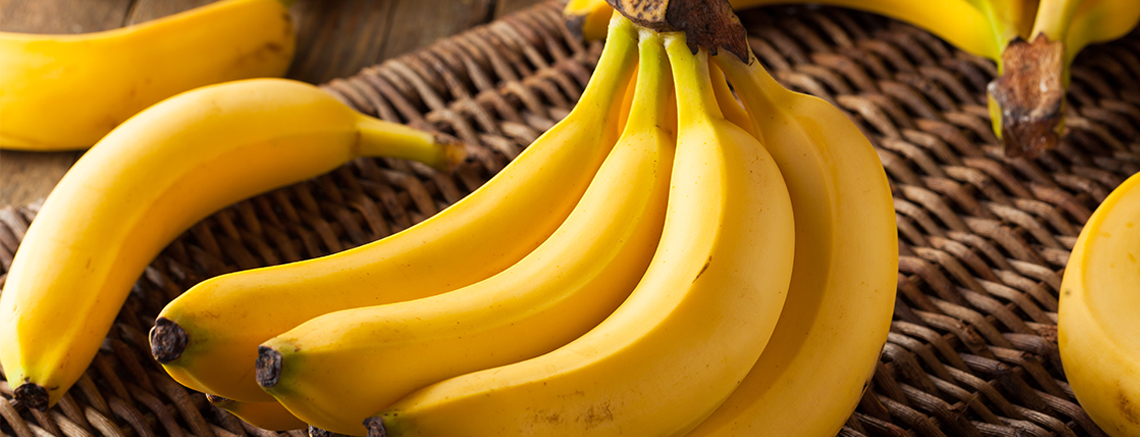
Bananas are always a favorite, and are arguably one of the most versatile fruits to have on hand. Whether they're served fresh or made into a delicious dessert, the applications are almost endless. Learn more here about banana types, and how to purchase the perfect kind for your operation.
Before purchasing, discover everything you need to know about popular banana varieties, grades and standards, and storage and handling.
Popular Banana Varieties

Cavendish
There are more than 1,000 varieties of bananas, with the Cavendish variety being the most popular in the U.S.
Banana Grading
There are no USDA grade standards for bananas. Bananas are generally categorized as Industry Grade No. 1 premium by major banana companies as part of their own growing standards. Smaller bananas sometimes are Industry Grade No. 2.
Source: U.S. Department of Agriculture
Banana Ripening Stages
- Bananas are picked off the plant green, and shipped under refrigeration to wholesalers, who then ripen them
- Bananas are ordered by level of ripeness
- The ideal stage for delivery is typically stage 5 (yellow with green tips)
- The riper the banana, the sweeter the flavor
Color Index Numbers for Banana Ripening
Source: U.S. Department of Agriculture
Banana Storage and Handling
Poor temperature management causes overripe, damaged or chilled fruit, so it's crucial that bananas be handled with care.
- Exposure to extreme hot or cold temperatures should be minimized
- Banana pulp temperatures should be maintained between 56-65℉
- Typical shelf life is 3-7 days for ripened bananas, depending on conditions
- Handle with care. Bananas are fragile and easily damaged or bruised when cases are dropped or thrown
Storage Tips
- To speed ripening if bananas are too green, leave them in the box stacked on top of each other
- To slow ripening, take the lids off the boxes, open the plastic liner and air-stack or stagger-stack the boxes to ventilate
| TEMP | CHARACTERISTICS AND STORAGE |
|---|---|
| Below 56℉ | Induces chill damage, poor overall appearance, and shrinkage. |
| 56–60℉ | Ideal storage temperature range for bananas. |
| Above 65℉ | Accelerates ripening, causes shrinkage, and shortens shelf life. |