Stuffed Pasta That Tells a Story
See how chefs are capitalizing on stuffed pasta’s popularity
Call it raviolo, tortellini, agnolotti or any of the innumerable names for stuffed pasta. No matter the name, diners love the indulgence of a starch filled with rich and creamy ingredients.
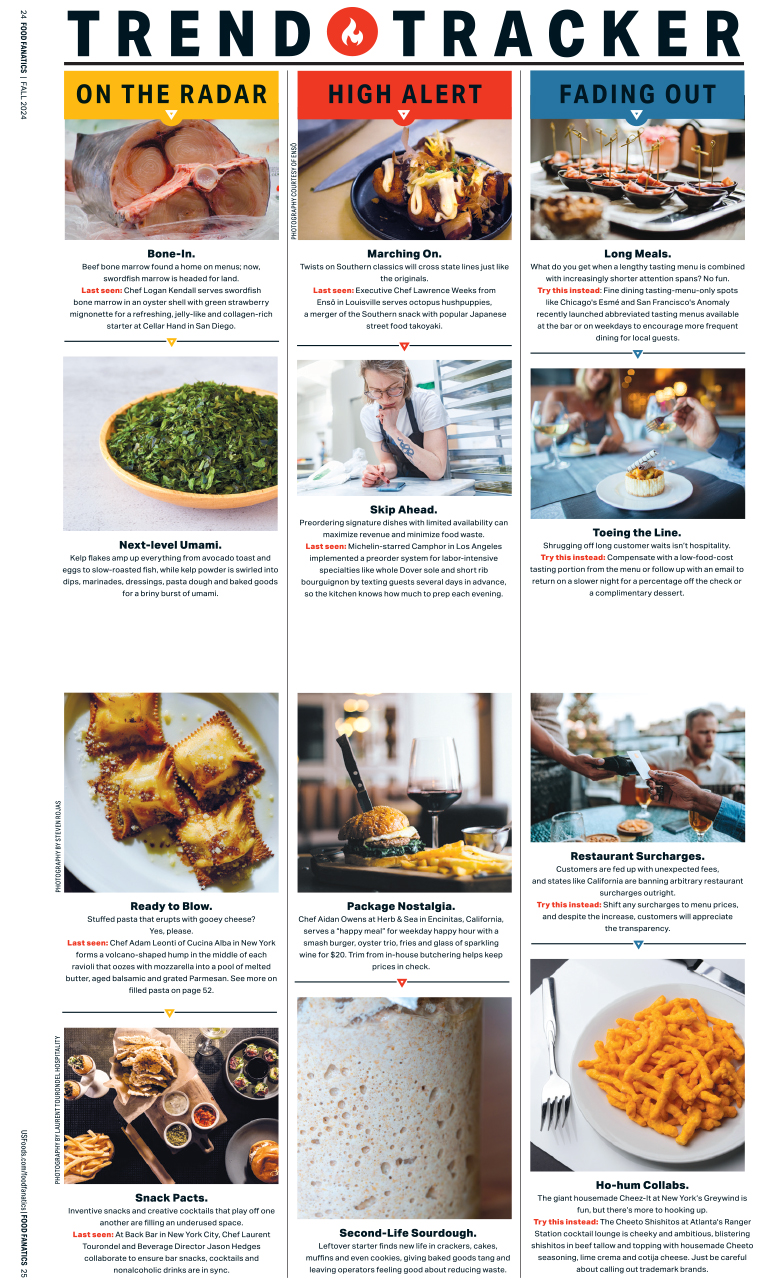
According to restaurant research firm Technomic, 21.7% of restaurants offer stuffed pasta, up by 1.8% during the past five years. That figure is even higher in fine dining restaurants, of which 41.7% have stuffed pasta, up from 40.2% in 2019. While consumers have a love-hate relationship with carbs, statistics show that growth looks promising. Datassential, also a food research firm, projects a 46% increase in stuffed pasta during the next three years.
 The growth jibes with the uptick of pasta programs at casual and upscale restaurants that offer thinly-rolled stuffed dough as a way to showcase vegetables, a location or an Italian region, along with indigenous ingredients. Basically, it’s a vehicle to tell a story.
Make it personal
Chef/owner Miguel Trinidad’s chopped cheese raviolo at Marie’s in Brooklyn, New York, is an homage to his Italian wife’s family, while the stuffing of ground beef, cheese and sazon speaks of his Dominican heritage. “I also draw from the flavors of the neighborhood and of New York City.”
Create a sense of place
Rocio Neyra-Palmer, the chef de cuisine at Summit restaurant at The Broadmoor hotel in Colorado Springs, Colorado, looks at pasta similarly.
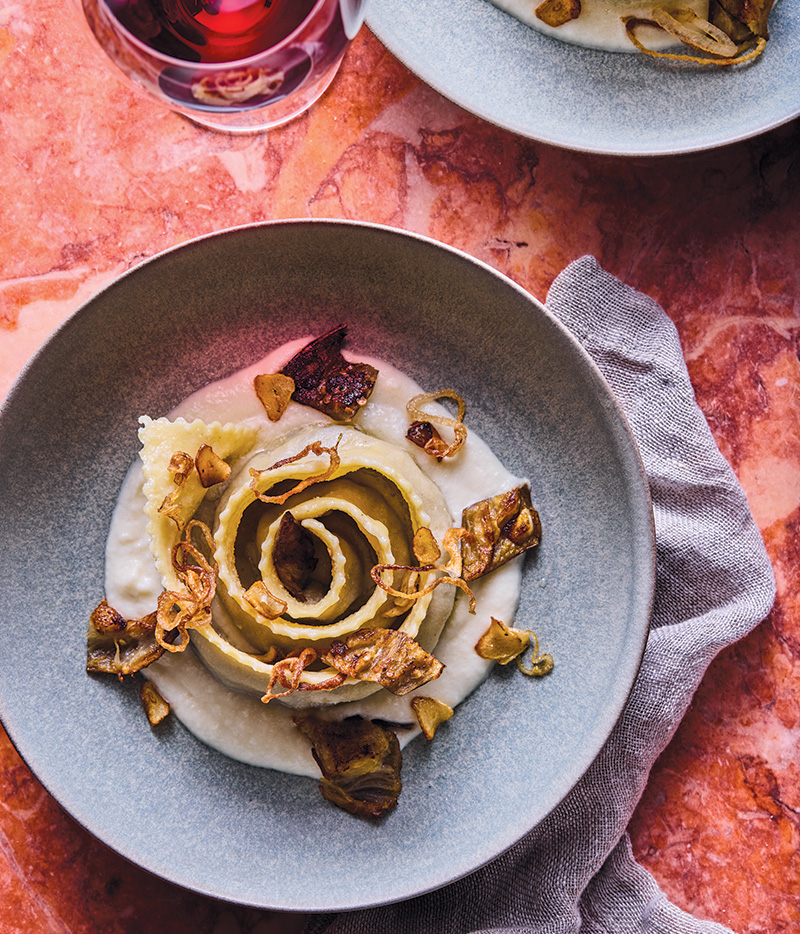
“Colorado has some nice varieties of eggplant that fit more with what we do at Summit, which is making good food with seasonal, local ingredients and having fun with techniques,” she says, explaining why she uses the vegetable to create fiore de carciofi, a shape that resembles artichoke flowers.

Rosa Bianca eggplant is roasted with garlic, puréed, mixed with goat cheese and piped onto thin sheets of pasta, which she then folds over, seals and rolls into spirals. The pasta is boiled quickly and served with a garlic cream sauce and Vidalia onion soubise.
Give it a twist
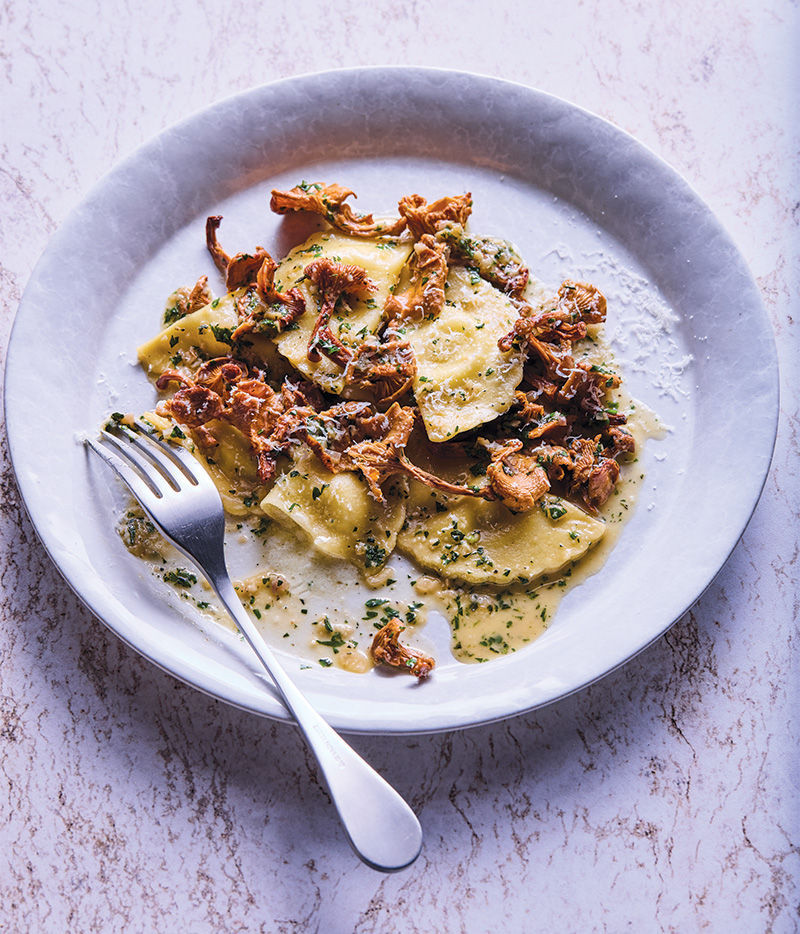
Local and seasonal mushrooms are at the core of the large half-moon-shaped pasta at Saint Bibiana, a restaurant named for the patron saint of hangovers in Savannah, Georgia.
Executive Chef Derek Simcik focus on coastal Southern Italian food—Rome down to Naples and Sicily and around the heel of the Italian boot to Puglia —“with a little bit of influence from the (U.S.) South, mainly with the ingredients,” he says. That approach is the basis for mezzaluna. “It’s like a reverse mac ’n’ cheese.”

The filling for the half-moon shapes features taleggio cheese whipped with heavy cream, which results in a light and airy but rich mouthfeel. The rest of the dish highlights whatever mushrooms are in season—morels in early spring and chanterelles later— in a simple wine reduction sauce with herbs.
“The herbs and a little acid, plus the earthiness of the mushrooms, play really nicely with that cheese,” he says.
Evoke playfulness
At Casadonna, a Tao Group Hospitality restaurant in Miami, pasta shaped like wrapped candy (think caramels or saltwater taffy) conveys a sense of whimsy. In one rendition, Corporate Executive Chef Hugo Bolanos, who developed the recipe, sautés seasonal corn (grated raw) into a paste and combines it with whipped ricotta, grated Parmigiano-Reggiano and an egg white to help bind the ingredients. The mixture is dolloped onto fresh pasta sheets, cut, sealed and twisted at the edges to resemble candy wrappers.
Twist tradition
Not all chefs focus on local ingredients for stuffed pasta. At Delmare, a seafood restaurant at the Eclipse at Half Moon in Montego Bay, Jamaica, Chef Claudio Facchinetti reaches for a traditional filling from Italy’s southern region for agnolotti, a northern Italian pasta shape.
“The pesto Trapanese is typical of Trapani, a city in Sicily,” Facchinetti says of Sicilian pesto’s blend of roasted almonds, caciocavallo cheese, tomatoes, garlic and basil.