

Stay Connected!
Sign up today and get inspiration straight to your inbox.

Protein has dominated health conversations as of late, but fiber’s quickly catching up.
Social media helped accelerate the shift—and gave it a catchy name. “Fibermaxxing,” as it first became known on TikTok, encourages consumers to pack as much fiber as possible into meals through ingredients such as beans, whole grains, fruits and vegetables.
“There’s also a lot happening on social media around ‘fibermaxxing’ and high-protein recipes,” says Jillian Marino, RD, LD, corporate chef and dietitian with Morrison Healthcare. “As dietitians and clinical experts, our role is to make fiber realistic and practical for people.”
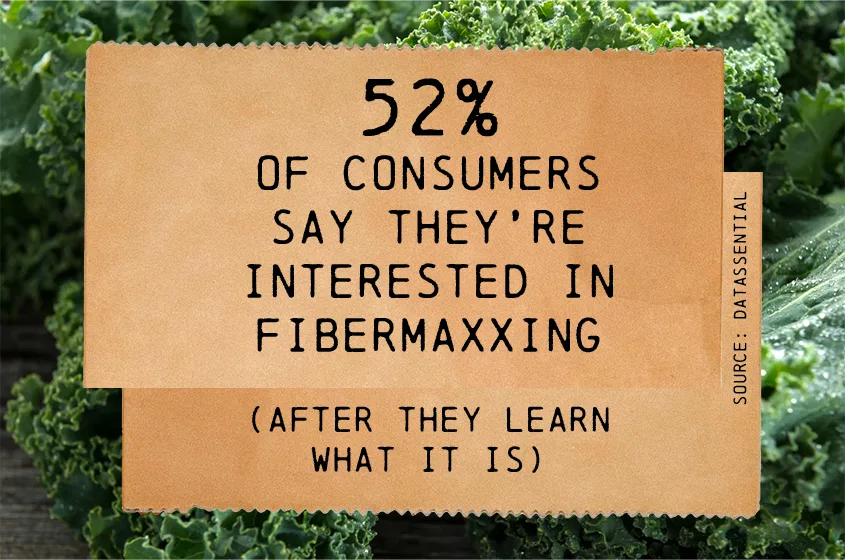
The term is still emerging—only 12% of consumers overall know what fibermaxxing is, according to Datassential, though interest jumps to 21% among Gen Z. Once consumers understand the concept, 52% say they’re interested in trying it, revealing broad potential for fiber-focused products and menu items.
Datassential research also shows 52% of consumers want to increase protein intake, while 51% say the same about fiber, signaling that fiber could soon rival protein as a major nutrition driver.
Growing interest in gut health and the rise of GLP-1 medications are also pushing fiber into the spotlight—both in consumer conversations and on food and beverage packaging.
“As GLP-1 medications become more accessible and affordable, we’re seeing a rise in demand for higher-protein and higher-fiber options,” Marino says.
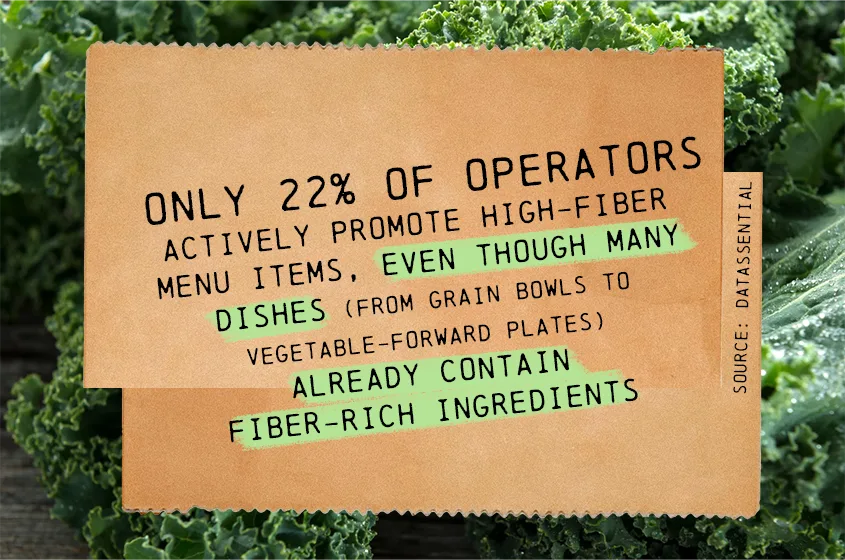
Datassential reports that only 22% of operators actively promote high-fiber menu items, even though many dishes—from grain bowls to vegetable-forward plates—already contain fiber-rich ingredients. As GLP-1 use and gut-health awareness continue to grow, highlighting fiber could be an easy way for operators to connect with health-focused diners.
Either way, Marino says the increased attention is long overdue. The recommended daily fiber intake for adults is about 25 grams, yet the average American consumes only about 16 grams per day.
“Fiber has always been important, but it’s becoming more of a buzzword because people are more aware of gut health now,” she says. “It improves digestion, helps control blood sugar and keeps us fuller longer. And it’s especially helpful for managing some of the digestive side effects of GLP-1 medications.”
At the members-only club Gravitas in Beverly Hills, California, the Gravitas Bowl features brown rice, tamari-adzuki beans, griddled sweet potato, seaweed salad and housemade kimchi.
California-based True Food Kitchen’s Ancient Grain bowl features organic grains, miso sesame glazed sweet potato, charred onions, snap peas, portobello, avocado, pistachio pesto, hemp seeds and turmeric.
At the newly-opened, wellness-focused Azara in Atlanta, the colorful Quinoa Salad features dried cranberries, apples, celery, parsley and agave vinaigrette. Read more about the physician-led philosophy at Azara and how you can think outside the box with your concepts, too.
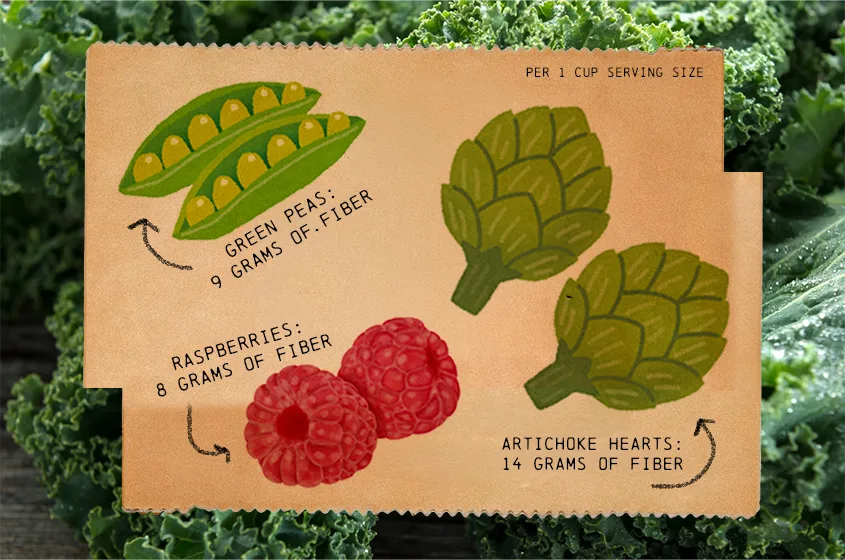
According to the Mayo Clinic, the top 10 highest fiber foods include, for about 1 cup each:
Order these and other fiber-rich ingredients through the MOXē® online ordering site.
Did you know…? Protein’s also a powerhouse on menus these days. Read more about how to make trending proteins and protein-based applications profitable for your operation.