

Stay Connected!
Sign up today and get inspiration straight to your inbox.

Chefs and operators are being asked more and more to bring their food outside their four walls—from backyard barbecues at private homes to food festivals, farmers' markets, demos, pop-ups and larger-scale off-site catering events. Barbecue master, caterer and content creator Joe DiApice (@bbqfriend) swears by his Cam GoBoxÒ Food Transporters.
“Catering is a major part of any restaurant—it opens up a completely different revenue stream,” says DiApice. “You can only bring in a certain number of people to your restaurant, so I’m seeing more [operators] bring their food to other places, rather than just try to pump everyone through a single location.”
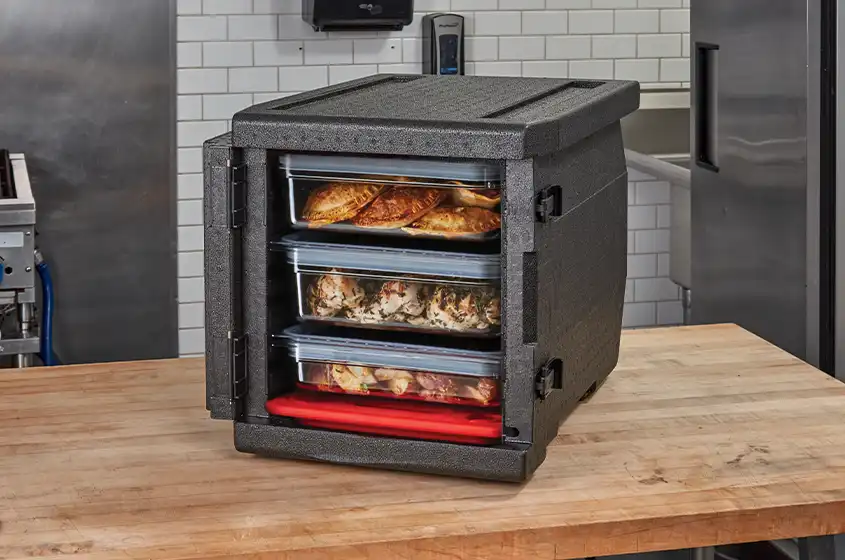
“It’s so important to let brisket, pork shoulder and other slow-cooked meats rest when they come off the smoker, so the temperature comes down and the juices redistribute. Ribs might only need an hour, but larger briskets might need a minimum of two hours, up to six. After cooking to about 195°F or 205°F internal temp, I’ll let the meat cool slightly at ambient temperature to stop the cooking, then wrap it and put it in the go-box to rest and hold temp, until we’re ready to shred or slice and serve.”
“The built-in shelving system has grooves to hold the lips of hotel pans, so you don’t have to stack food directly on top of each other in an open carrier. This is great if you’re transporting a delicate cake, or have macaroni and cheese with the cheese melted on top—you don’t have to worry about food getting compressed when stacked. It makes retrieval during service super-easy and less messy.”
“It’s super important to keep cold food at the right temperature when serving outside. I have my freezer ice packs ready to go, and just slide them at the top of the unit on one of the shelves, and I’m ready to go. I use the cold carriers for coleslaw, banana pudding, macaroni salad, potato salad. The boxes are also light and fully insulated separately, so you don’t have to worry about hot food bringing down your cold food temps or vice versa.”
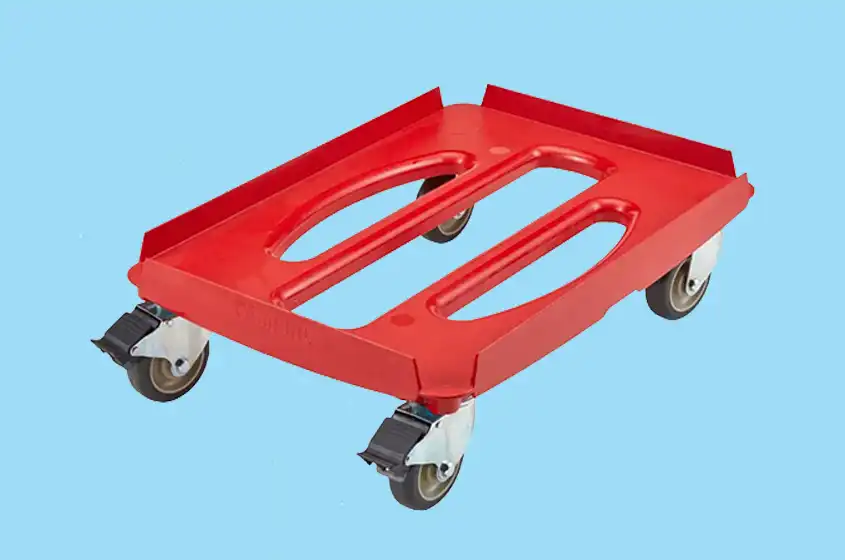
DiApice’s must-have accessory for these food transporters is the Cam GoBox® Camdolly® Compact “You can stack cold boxes right on the hot boxes like a Lego set, and roll the carts in and out of your venue, without needing another person to help you push and pull heavy carriers with 60 pounds of meat in it around,” he says.