


Large-Format Entrées Can Boost Profits and Experiences
Rules for profitable big-format dishes
When does it pay to go large? A single entrée for the table to share creates a convivial dining experience reminiscent of holiday meals and gatherings. Whether it's a hefty bone-in steak, whole fish, whole chicken or a pan of paella, guests get to sample their way through starters, leading up to one interactive apex dish. Chefs who have mastered the art of large-format dishes share how they choose enticing items for guests and the kitchen without cannibalizing other entrée options.
Create Value Perception
 Lamb shank tagine, available in a single or double size, is among the most popular large plates at Meso Modern Mediterranean in San Jose, California. “When you see a giant platter coming to the table, the perception of value is higher,” says Executive Chef Cory Armenta. “It's fun and engaging, and guests definitely feel like they're getting their money's worth.” Meso also serves whole chicken and whole grilled branzino; servers are trained to recommend small plates and side dishes to round out the meal, depending on which large-format protein is ordered. Upselling sides and appetizers also keeps the check averages up and adds incremental profit.
Even a single lamb shank is large enough for two to share, and Armenta notes that double shanks are large enough for up to six guests. It's most popular on weekends with larger parties, compared to business lunches, when diners might not feel as comfortable sharing.
“In some concepts, profitability depends on how quickly you can turn the table,” Armenta says. “But with our style of menu, if we can keep you and your party having a good time and more drinks coming, you can have the table for four hours.”
Make Your Large Format Entrée Spectacular
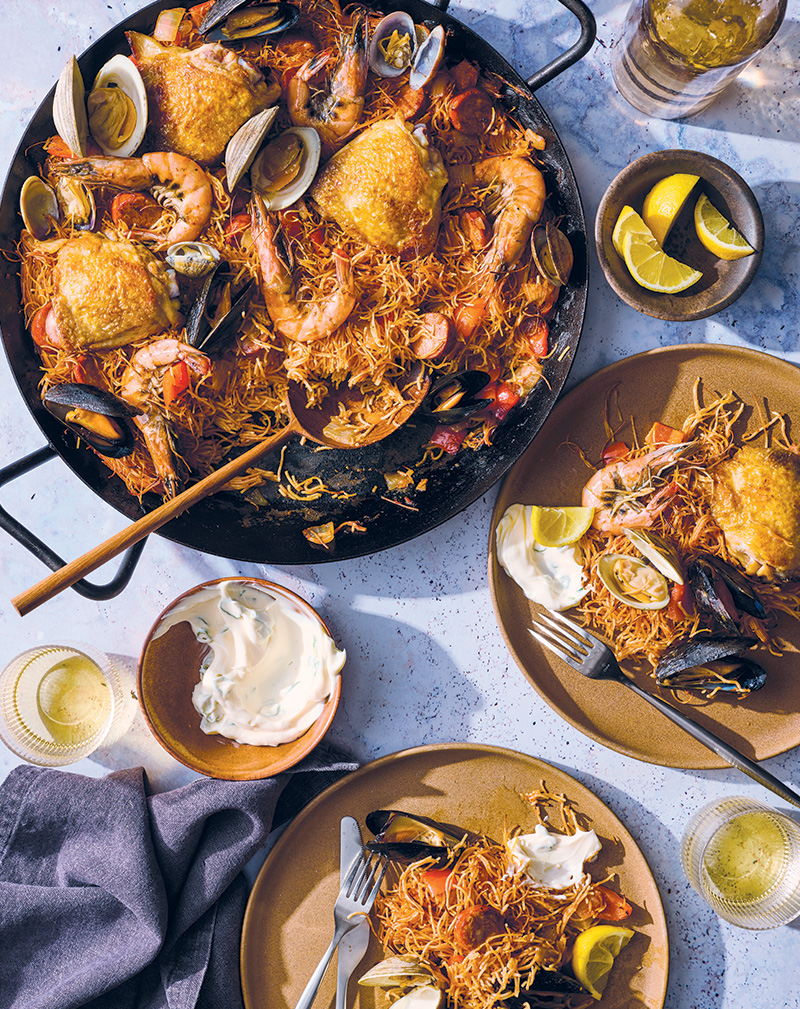
If the menu mix includes just one large-format entrée, give it marquee billing with its own box–and make sure it's the best representation of the restaurant. At Broma, a Portuguese and Spanish restaurant in Silicon Valley, Catalan Fideua is the restaurant's signature dish. Similar to traditional Spanish paella, it's presented on the table in a paella pan with sliced lemons on the side, so guests can serve themselves.
 “It's one of our best-selling entrées,” says Chef Jarad Gallagher. "People are into it because it has a great story and is bountiful. Fideuà is pasta, vegetables, shellfish and sausage, so there is value in the dish. It has all kinds of flavors, ingredients and textures.” A vegetarian version is available upon request, and on “Fideuà Fridays,” guests can enjoy a bottle of cava, salad, fideuà and flan as a set meal experience.
At Richard Blais' newest restaurant, La Zozzona in Scottsdale, Arizona, Bistecca Fiorentina steals the show as the only large-format dish. More than a kilo of prime beef porterhouse, brushed with rosemary and sage, is carved tableside by the chef for additional flair.
Invest in the Experience
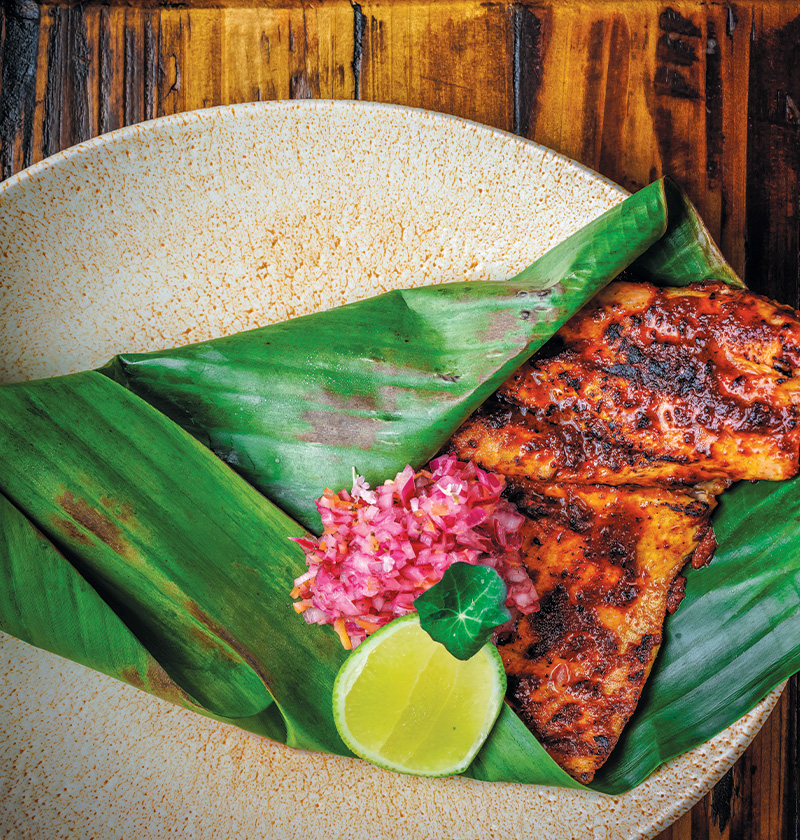
Some operators build their menu to include several large-format options, with the goal of selling them to every table. “We just need to get back to sharing around the dinner table,” says Chef/Owner Ras Casiano of Xiquita Restaurante y Bar in Denver, who offers several large-format “grandes” dishes on the menu at his Mexican restaurant, including slow-roasted pork belly porchetta, carne asada and Tikin Xie, adobo-rubbed fish in a banana leaf. “I love being able to pass around a plate and share in the experience of those first few bites. It adds a lot to the whole experience of dining out.”
 Even though the large-format dishes can drop the per-person check average if servers aren't able to upsell, Casiano considers it a win when guests share in a memorable experience that they'll tell others about. He also knows that diners are increasingly looking for more experiential dining when deciding where and how to spend their money.
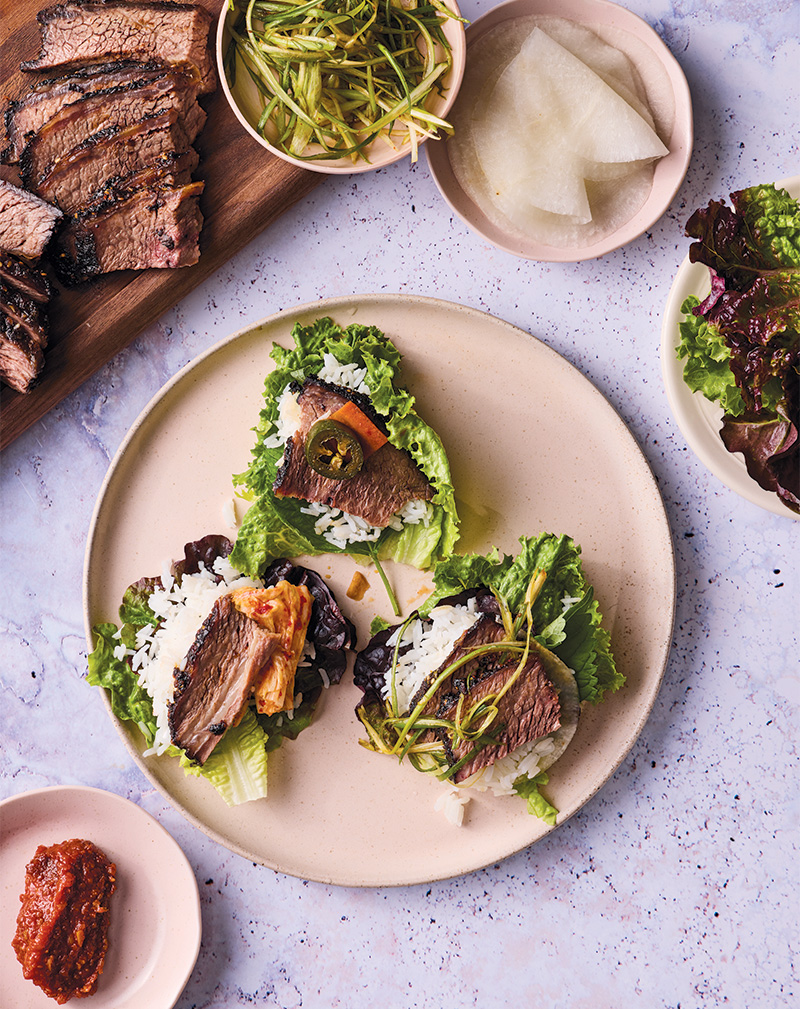
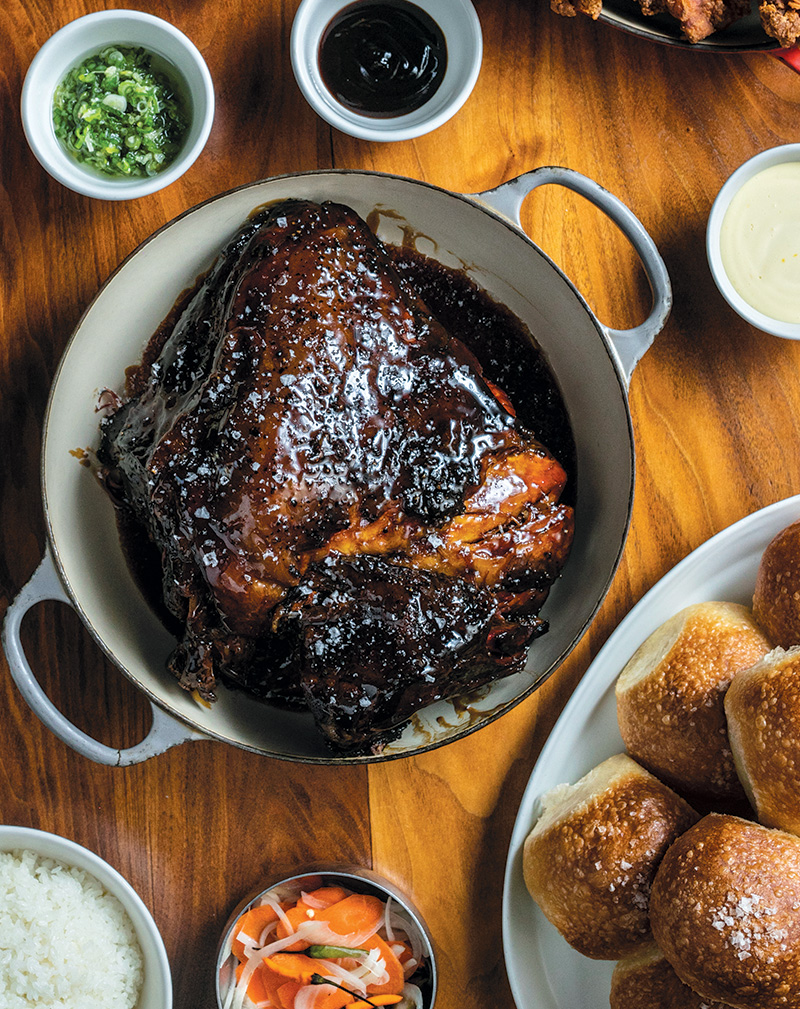
“We're thinking center of the table,” he says. “We want to make sure that it's one of those 'wow' moments as soon as it hits the table.” Housemade nixtamal tortillas are served on the side so guests can make their own tacos, or use as a vessel to pick up sauce and meat. At Majordomo in Los Angeles, large-format dishes that feed up to six guests, such as whole plate short rib, smoked prime rib, smoked half bossam and whole boiled chicken, rule the day. “We are not concerned with cannibalizing entrées,” says Momofuku Corporate Chef Jude Parra-Sickels. “We want to sell as much large-format as possible, and would only serve large-format if we could.”
 The restaurant even introduced a vegetarian pastilla dish stuffed with mushroom farce, roasted eggplant and celery root purée to their events menu for a large-format vegetarian option.
“For the kitchen, it allows for a more manageable and streamlined service, because we are feeding multiple people with just one dish,” Parra-Sickels says. “It makes the dining experience more festive, celebratory, communal, and adds a great energy to the dining room.”