American chefs bring global elements to Italian cuisine
American consumers want to try something new—but not too new. Take a dish that they’re familiar with and add one thing different to it—a local vegetable, a different style of pepperoni, an unexpected spice—and they’re all over it.
That makes Italian food, the most mainstream of so-called “ethnic” cuisines, a perfect starting point for approachable innovation.
Call of the South:
Italian Soul Food

Atlanta restaurateur Deborah VanTrece combines Italian and American soul food in some dishes at her restaurants, including ravioli in arrabbiata sauce—tomatoes, garlic and chilies cooked in olive oil, —stuffed with Mississippi catfish at Twisted Soul Cookhouse and Pours.
At La Palabra, an Italian restaurant she closed earlier this year to focus on other projects, she turned a Kansas City soul food tradition of fish and spaghetti into a more Italian dish: red snapper Bolognese. She sweated onions and bell peppers in olive oil, followed by garlic and chopped snapper. Once the fish was cooked, she added stock, basil, granulated garlic and onion and marinara sauce, followed by liquid crab boil, Creole seasoning, Old Bay seasoning, salt and pepper, and let it simmer. She served it with angel hair pasta.
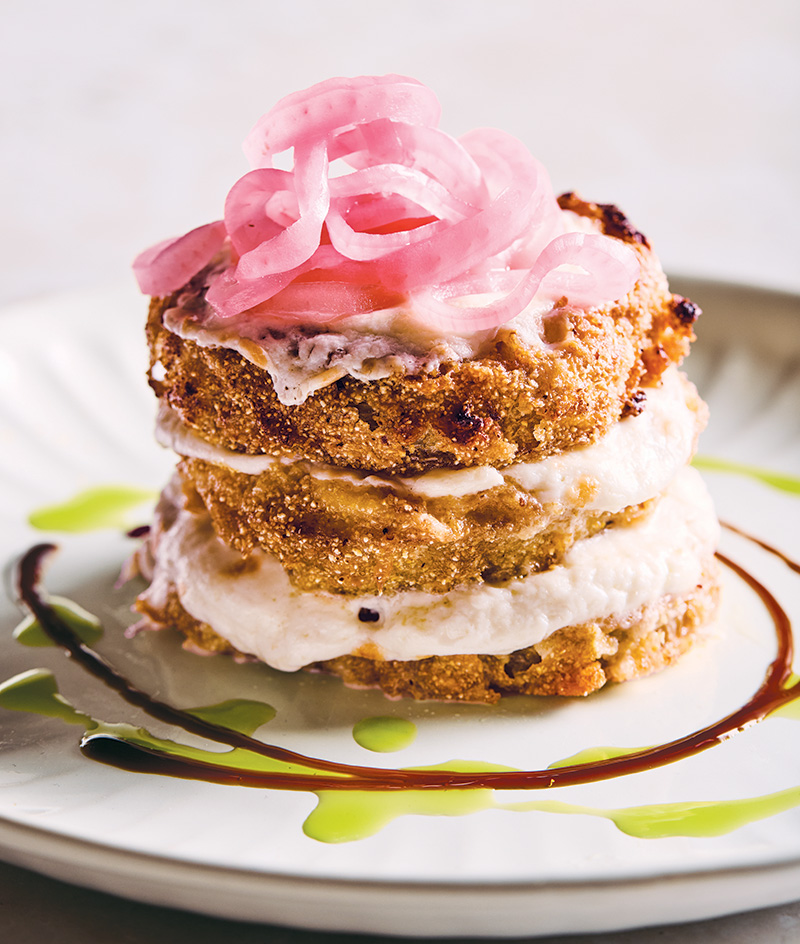
Nia Grace, the owner of Grace by Nia, a modern soul food restaurant with locations in Boston and the Foxwoods Resort Casino in Ledyard, Connecticut, also fuses soul food and Italian, using a fried green tomato as the base for caprese salad.
Far East Reach:
Wafu Italian
Wafu Italian, or Japanese-style Italian, is a veritable cuisine all its own in Japan that has also gained popularity in Italy and the United States.
Robbie Felice has seen success at PastaRamen, which he opened last year in Monclair, New Jersey, after running it as a pop-up. Dishes included Japanese gyoza dumplings stuffed with Italian cacio e pepe sauce (Pecorino) and spaghetti carbonara with Japanese sea urchin.
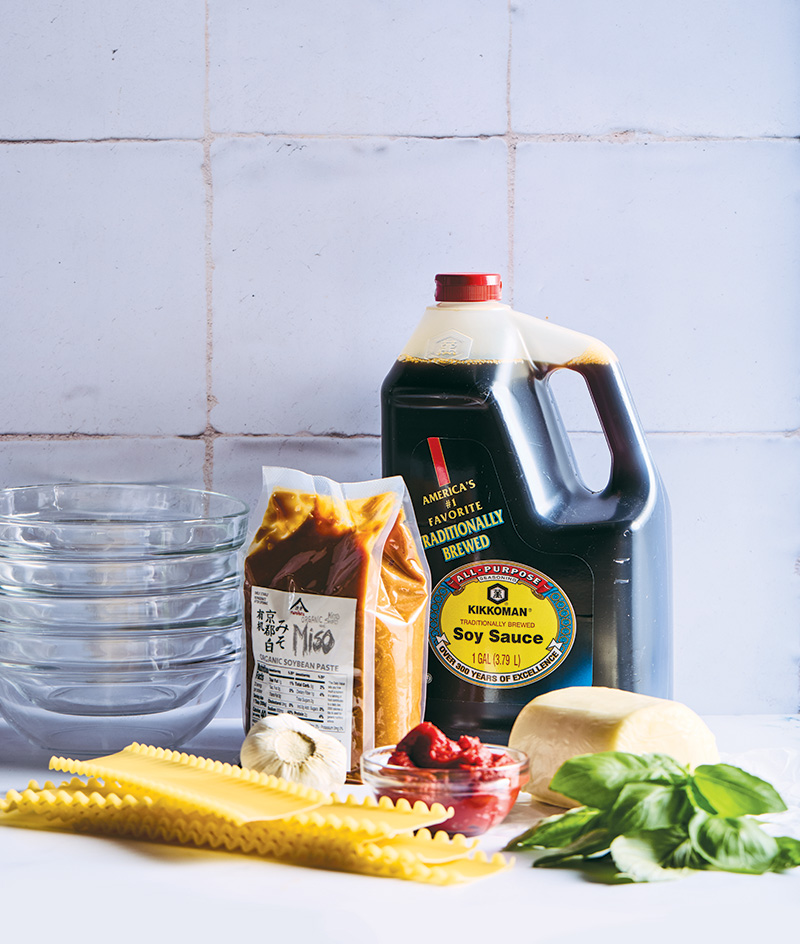
Adrian Cruz, former chef de cuisine of Alla Campania in Fredericksburg, Texas, developed a Wafu lasagna using ground seasoned pork like the kind in a Japanese dumpling with miso, sesame oil, chiles and savory-sweet eel sauce, combined with Italian cheeses, lasagna noodles and MSG.
At 1799 Kitchen & Cocktails in Franklin, Tennessee, Executive Sous Chef Kirstyn Bielawa took traditional panzanella, a bread salad from the Italian regions of Tuscany and Umbria, and gave it a Southern flair by making it with cornbread.
Executive Chef Thomas Tuggle said the resulting dish is one of his favorites on the restaurant’s summer menu. “It embodies all the best bits of summer produce and that Southern love of crispy cornbread,” he says. “It’s our Tennessee take on our Italian chef Kirstyn’s family classics. It hits all the notes: sweet, savory, salty, sour, umami. Each bite is a little bit different and sends you back wanting more.”
Getting Personal: Infusing Your Roots
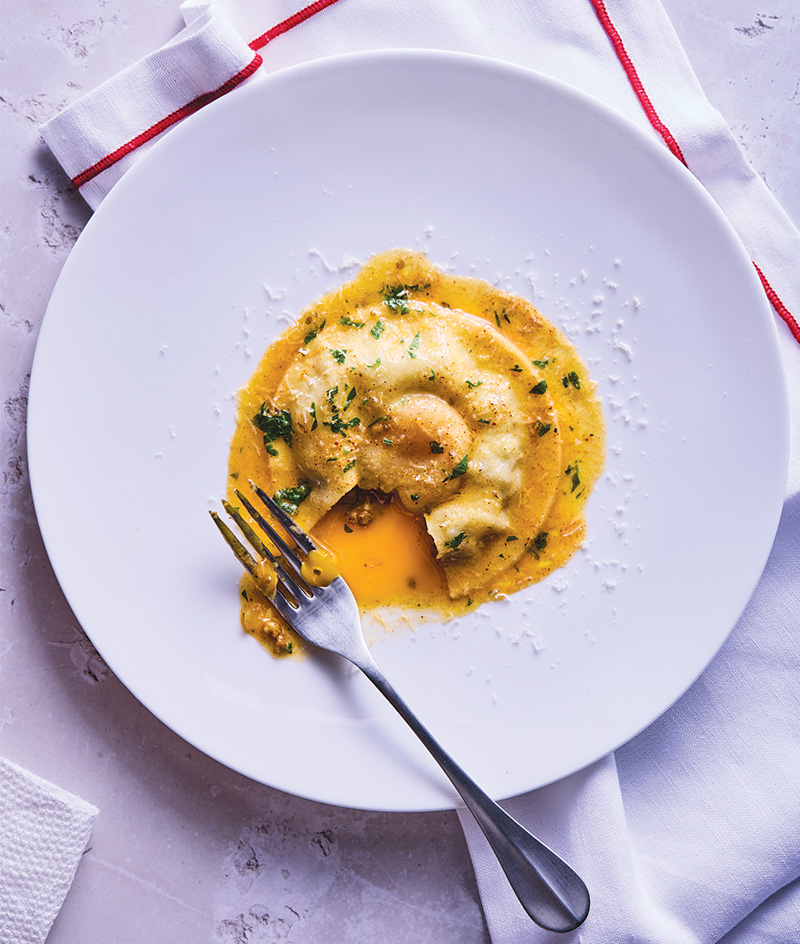
 When Miguel Trinidad, who is Dominican, opened Marie’s in the Bushwick section of Brooklyn, New York, earlier this year, his goal was to offer more than a traditional Italian restaurant: He wanted to honor his wife’s Italian family. “They pick vegetables from their garden, and we cook them within minutes of picking. I wanted to bring that freshness to the dishes at Marie’s.” He also “wanted to add a little bit of my heritage into it.”
That desire resulted in a raviolo stuffed with meat, cheese and his rendition of sazon. “Sazon is a big part of Dominican culture,” he says. “You can see the influence of Latin culture in the duck ropa vieja and the Caribbean influence of the neighborhood in our Jamaican beef ragu. Marie’s is a love letter to Bushwick in New York City.”
Tips for Creating Italian Fusion Menus
All bets may be off for mingling cuisines, but it’s still smart to avoid confusion. Some tips and watchouts from chefs:
Stick with simple. A fried green tomato as the base for a caprese salad makes sense as a Southern spin on a classic Italian appetizer. Supporting components should complement, not complicate.
Keep it familiar. Lasagna that includes meat seasoned with Japanese ingredients is relatable, but diners might be confused with the lesser-known timballo, a dish of baked pasta and meat.
Take a test drive
If you know your diners like spicy, turn out an arrabbiata version of a menu item, whether it’s a sauce, topping for a burger, side dish or vegetable.
Infuse you
If you head an American concept and your heritage (or someone meaningful to you) has an immigrant background, think of an “ode to” adaptation of a dish. Include background in the menu description.
Don’t forget the drinks
The beverage options of every cuisine are plentiful, from housemade cocktails to beer and wine, and they can complement the direction of the fusion dishes while increasing check averages.