


Global Pizzas Lead to Innovation & Introduce New Flavors
Explore pizzas inspired by cuisines from Japan to India and beyond
Smoked salmon, barbecue chicken and pineapple with ham on pizza raised eyebrows when chefs first started innovating pies in the early ’80s, but those toppings laid the groundwork for a global canvas. Imports from Japan and India are making the biggest splash, and just about any ingredient (hot honey and nduja) from any diaspora, such as Mexico and the Middle East, are landing on pies.
Why? It’s simple: For four decades, children raised by immigrants have been cooking through the lens that merges America and their ancestral background. Here’s how they’re capturing the palates of diners who grew up with a similar experience.
East Meets West: Japanese- & Vietnamese-Inspired Pizza
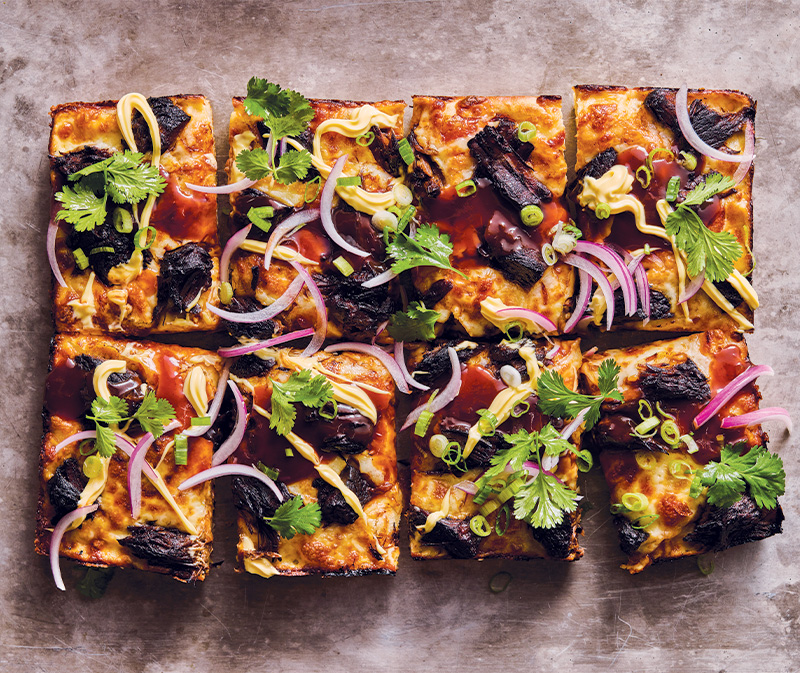
Chef Shota Nakajima serves Detroit-style pizza with a Japanese flair at Kobo Pizza in Seattle. Unique toppings range from miso-roasted mushrooms to Japanese fried chicken with nori ranch and koji hot sauce. His best-selling Dodger pizza (named after his border collie) features teriyaki-braised short ribs, tonkatsu tomato sauce and a kewpie base sauce. “This for me is the perfect mix of Japanese flavors on a pizza,” he says. “My favorite part of Detroit-style pizza is that you can add a lot of flavors and it holds up well. I braise short ribs using no sodium, so it gets extremely soft and is dog-safe so I can give Dodger the edges.” Monterey Jack cheese tops the crust, pushed tightly up against the edges for a super-crunchy contrast with the melt-in-your-mouth short ribs.
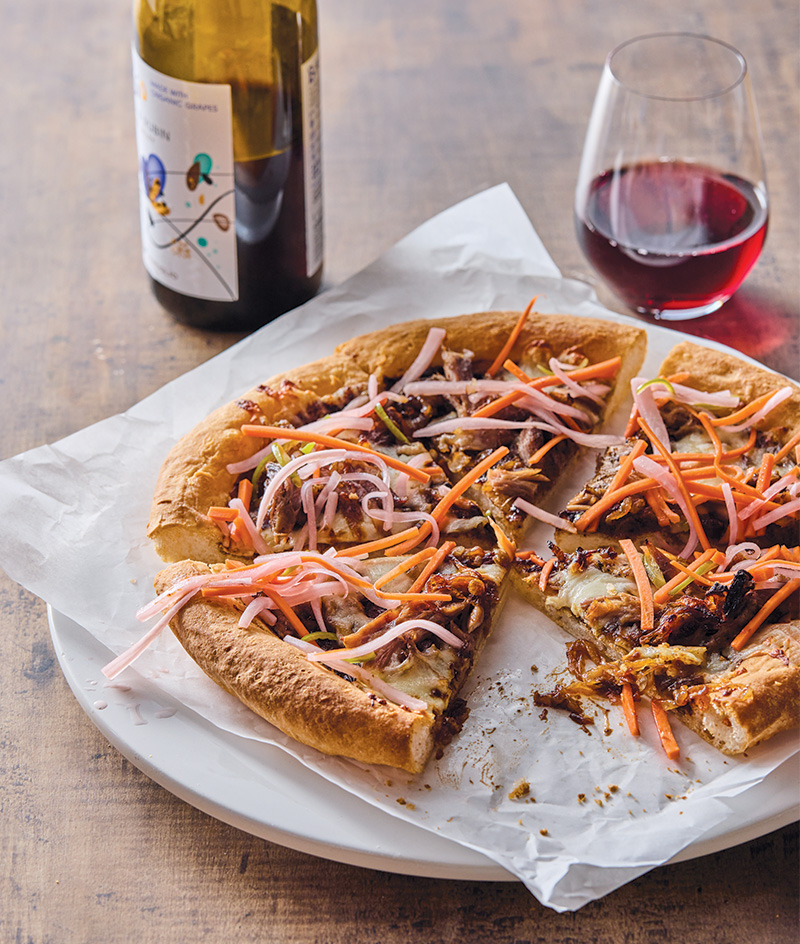
At Mother Pizzeria in Rhode Island, Executive Chef Kyle Stamps serves a banh mi-inspired Wise Quacker pizza with duck confit, caramelized onion, fermented black bean, pickled vegetables and sesame oil. “Using a rich meat, such as duck confit, and pairing it with pickled vegetables is a match made in heaven,” he says. “We round it out with sesame-spiked hoisin and freshly picked cilantro. If something is good on a sandwich, it is most likely going to be good on a pizza; you just need to find the balance.”
From Curry to Tikka Masala: Indian-Inspired Pizza
Indian pizzerias have taken off in the past few years, including James Beard-nominated sports bar Piija Palace in Los Angeles, where customers can choose white korma, peri peri vindaloo or northern Makhani sauce rather than tomato sauce. Toppings include tandoori onions and housemade Goan sausage. Curry Pizza House currently has more than two dozen locations across five states, with another dozen slated to open. Diners choose between classic Italian renditions and 17 types of curry inspirations, ranging from butter chicken to aloo gobi.
Curry Pizza House Founder Gursewalk Gill arrived in the United States from Punjab, India, with ambitious dreams to open a restaurant. He and his wife began experimenting with incorporating Indian spices into traditional American pizzas during their household pizza night tradition, and Gill recognized an opportunity to share a culinary experience that intertwined his native and adopted homes.
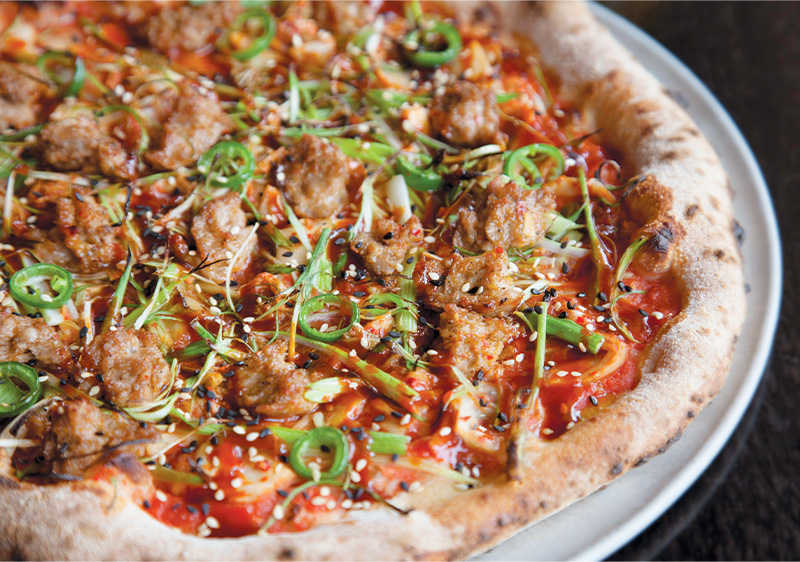
“When deciding which Indian dishes to translate into pizzas, we consider factors such as flavor compatibility,” he says. “A dish like the chili paneer pizza works well because the paneer, also known as Indian cottage cheese, offers a mellow cheesiness that complements the bold flavors and vibrant colors of its masala spices and curry sauce. Meanwhile, the smoky, spicy flavors of tandoori chicken add depth to the traditional pizza.”
Chef Jay Jadeja, born and raised in Gujarat, India, shares a similar approach at The Onion Tree Pizza Co. in New York’s East Village.
“Think about chicken tikka masala and naan—it’s a natural combination,” Jadeja says. “I’m essentially putting one on top of the other instead of serving them separately.” He uses only chicken thighs for the chicken tikka masala because they are more flavorful and tender than chicken breast. “Instead of the traditional yogurt, I add whipped cream for a fluffier, lighter consistency,” he says. A housemade ginger garlic paste helps bind the toasted seasonings.
No Boundaries, No Borders
Ultimately, there are no limits to the components that make up pizza. At Reilly Craft Pizza & Drink in Tucson, a rotating crew’s whim pizza allows employees to contribute with favorite ingredients from their culinary backgrounds. One recent example featured a mozzarella and fontina pizza with shaved red onion, fennel pollen and Mexican pork chorizo.
Roots Pizza in Chicago offers more than 80 toppings and housemade dressings for guests to build their own pizzas. Some of the more internationally inspired toppings include tortilla strips, spicy tofu, kimchi vinaigrette, carrot tahini, curry cauliflower and Tajin-roasted sweet potato. Favorites include taco pizza – a menu staple with taco-seasoned crumble sausage, housemade mozzarella, lettuce, tomatoes, sour cream and taco chips. There's also a tikka masala butter chicken pizza, and Korean fried chicken pizza.

“Pizza is a clever way to introduce international ingredients and flavors into an approachable food that everyone can relate to,” says co-owner Scott Weiner. “Over the years, working with dozens of guest chefs on collaborations, it’s introduced me to flavor profiles that I had even yet to try.”