

Stay Connected!
Sign up today and get inspiration straight to your inbox.

How tech is helping independent pizza businesses compete like the big dogs
Lee Kindell didn’t have dreams of going big. Instead, he relished stepping back from his hostel business in 2020 to make artisanal pizza—the kind of handmade delight that he once created and served to his hostel guests.
For a while, his Seattle-based business Moto worked. But an arm injury forced Kindell to cede the kneading to a large electric mixer he purchased secondhand. He says he can taste the difference between the mixer and the preferred hand-kneaded dough for the square pies.
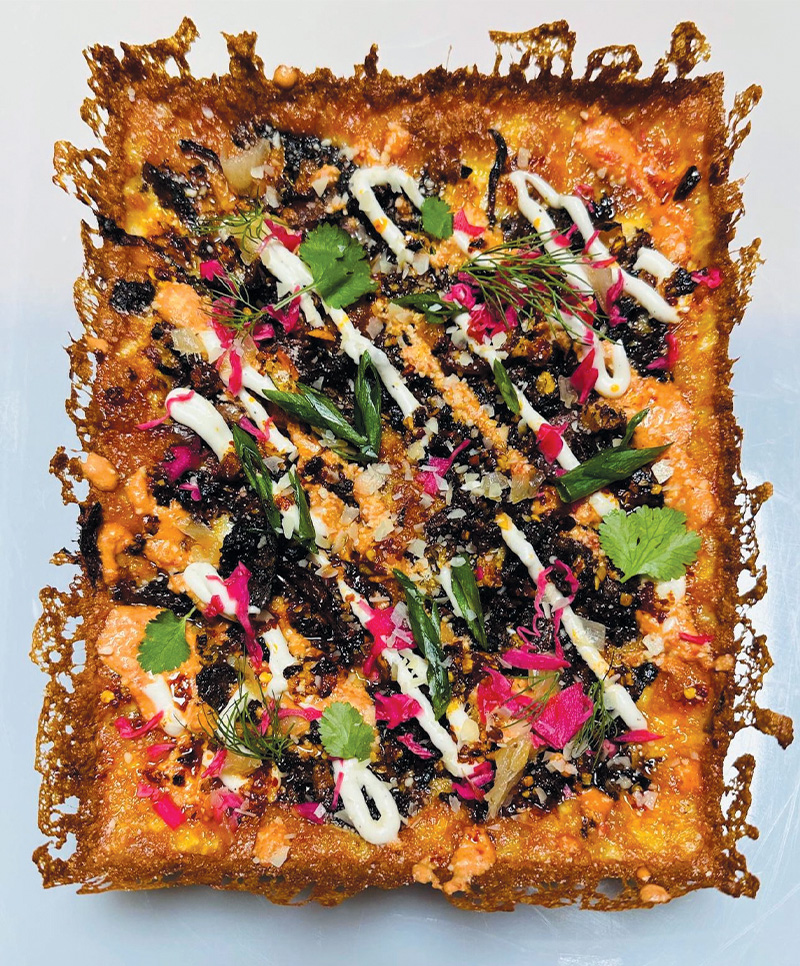
But sales showed no one noticed. At one point, the restaurant had a three-month wait list as Kindell’s pizza productivity tapped out at 300 pies per day. But the business was growing, expanding to several locations, including T-Mobile Park, home of the Seattle Mariners.
Kindell remained deeply committed to quality ingredients, but he quickly realized he could use technology to scale his craft. The mixer was just the beginning.
Pizzerias across the country are tapping artificial intelligence and automation to innovate on the speed, efficiency, marketing and labor of making pizza. In fact, the humble pie has enjoyed an outsized amount of attention and innovation from tech-minded types. Recipes have been tweaked and iterated on, production has been roboticized. Pizza was a delivery favorite long before restaurant delivery became a business expected to be worth as much as $250 billion by 2028. But mostly, pizza is a universally beloved slice of American history. Every day, one in eight consumers eats pizza. Americans are forecast to buy $50 billion in pizza this year.
Convenience also drives pizza. Domino’s launched its famed Pizza Tracker a decade-and-a-half ago, and it’s still leaning on tech to have a leg up on the competition. In an earnings call this spring, Domino’s CEO Russell Weiner told investors the chain is using AI to make pizzas before they’re even ordered. “You start your order online, and at some point, our algorithm figures out you’re ready to order and we start making them.” This leads to faster delivery or carryout times, rendering the entire process significantly more efficient.
Large corporate entities like Domino's have the capital to implement major technology improvements, giving them an edge over competitors.
But great technology isn’t reserved solely for the behemoths, says Tina Glickman, vice president of partnerships for Owner.com.
“For local restaurants, the key to building deeper relationships with customers through off-premise dining starts with owning the ordering channel,” she says. “By doing so, you can control your guests’ experience and gain valuable insights into who is ordering from you. With solutions like Owner, you can invest in technology to offer the same experience as the national chains. This includes a top-tier direct online ordering platform, which allows operators to fully own their customer data in order to send relevant and targeted personalized communications, as well as implement a customer loyalty program.”
There's also PizzaBox.ai, a sister service of tech company RestoGPT, which uses generative artificial intelligence to make branded ordering websites, manage incoming orders (including orders from third-party delivery services) and organize deliveries.
Vincent Chaglasyan, chief operating officer at tech company RestoGPT and its sister service, PizzaBox.ai, likens the tech to a digital restaurant employee who handles online ordering and delivery. To get started, a pizzeria inputs its menu link, and the system creates a direct online ordering storefront for pickup and delivery. To manage the storefront, restaurateurs chat with a bot like they’d talk to a person—for example, asking it to 86 menu items, or turn off delivery during certain hours.
It’s a high-tech service for a low-tech audience. Independent pizzeria owners don’t want or need complicated dashboards full of data to track and settings to tweak. “Sometimes they want a simple solution that essentially does it for them, in natural language,” Chaglasyan says.
But the best part, he says, is using tech to bring more equality to a business dominated by large chains. “Pre-off premise, independent restaurants, local restaurants, neighborhood restaurants had that advantage of being nearby—you had that special thing that many nationwide brands wouldn’t be able to compete with,” he says. “With off-premise (popularity), that was very much diluted and, to a certain degree, lost. It’s about restoring that and making sure your restaurants aren’t falling behind.”
Kindell’s enthusiastic embrace of technology to support every aspect of the business would take Moto to heights he couldn’t imagine, figuratively and literally.
He tapped a local pizza robotics company, Picnic, to use the company’s automated “pizza station” to assemble pies. The robot portions ingredients so precisely, it’s helped Kindell cut food costs and think differently about the best way to engage his human employees. The automation’s success prompted Kindell to sign a deal with a separate robotics company to add bot-made salads to Moto’s menus. Even his pizza’s shape is different, cut into rectangles about the size of an iPhone for portability. “You look at your phone everywhere. I wanted the pizza to be able to be eaten anywhere also,” he says.
He’s also reimagined classic pizza delivery. Soon, his pizzas will take flight in some Seattle neighborhoods with Zipline, a flying drone delivery service that can lower a box of pizza so precisely, it can land at the center of a backyard picnic table.
“Technology is the future, and I think if you're not jumping on board, you're going to be left behind,” Kindell says.